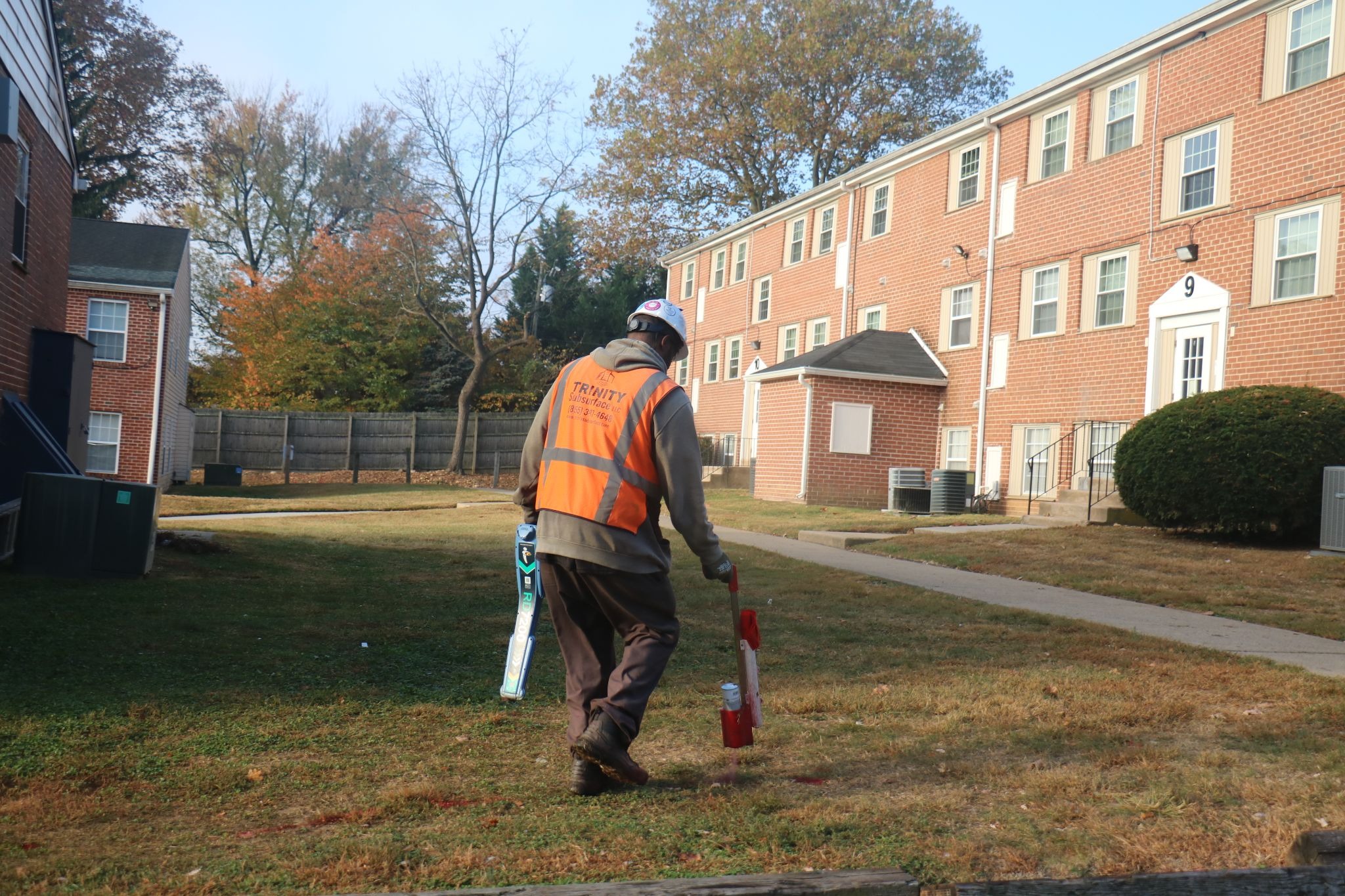
As part of Safe Digging Month, we’re highlighting all of the ways you can maintain your job site, protect excavations, and understand what’s underneath your site. There are a number of ways to make sure your next dig doesn’t lead to project delays, unexpected costs, and harm to your crew. Here are the ways you can protect your utilities.
Marking Out Public Utilities
One of the first steps of any project’s mobilization should be to contact a public utility locator. Your local public utility locator may fall under different names depending on your state: 811, Miss Utility, UDIG, Sunshine 811, One Call, to name a few. These services are funded by the government in order to protect publicly-owned utilities through a notification system that will come out and mark the public utilities you’re digging near, or at the very least confirm that lines exist within the area of work. It’s the law to notify public utilities of your digging activities to prevent damages to community-wide utilities. Once 811 has been notified and marked out all of the public utilities, hiring a private utility locator may be necessary to locate, markout and verify the remaining utilities on your site. Unlike public utilities, which are managed by local utility companies, private utilities will not be marked or verified through a call to 811. Utility companies determine where the public lines end and the private lines begin. Leaving private utilities unmarked can lead to a potentially dangerous site.
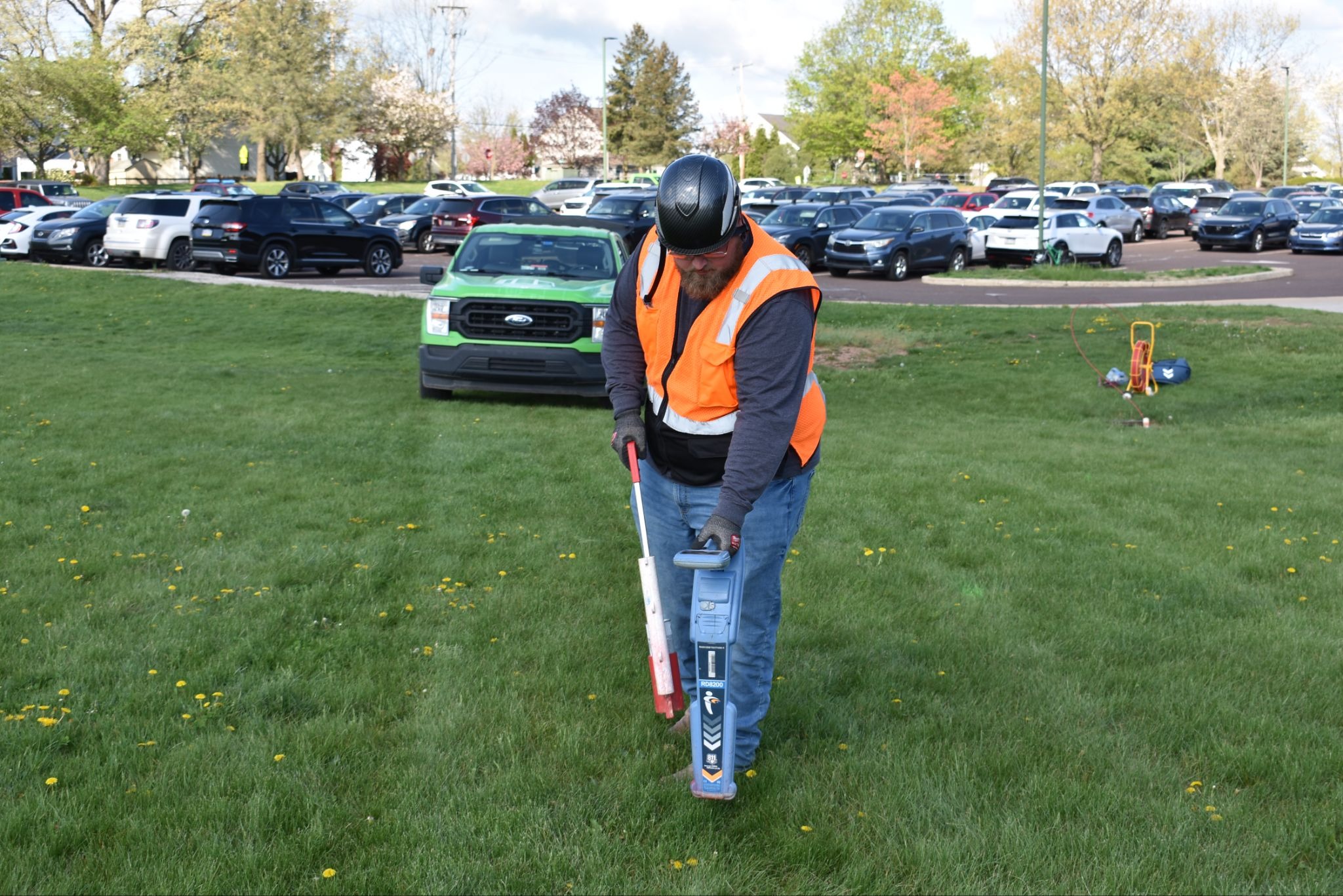
Marking Out Private Utilities
Private utilities are owned by the site itself, whether known or unknown. Lateral pipes, for example, fall under private ownership despite connecting to public utilities. Water lines traveling through a private property, secondary electrical lighting, irrigation lines, gas mains, underground storage tanks and more can all be considered private utilities. A private utility locator may use additional methods to examine utilities, including ground penetrating radar, split boxes, and duct rods.
One important aspect of ensuring all utilities are marked is ensuring site access is as available as possible. Without access to utility rooms and surface features, the information gathered may be more limited. A private utility locator, such as Trinity Subsurface, can provide subsurface utility information through maps and notes taken from site markings. Sharing uncovered utility information with your team is also helpful in planning for a safer dig. An additional but occasionally overlooked step is making sure that any field markings aren’t disturbed before digging actually starts. It’s recommended to give about a foot and a half of clearance around any utility markouts if you’re going to be digging in their vicinity. Communicating the importance of utility marks to others not in the know is also important to keep everyone safe. There are property owners who will remove utility markings before a project starts if they see the flags and water-based paint as a nuisance. It’s why awareness of the importance of locating services is half the battle!
Vacuum Excavation to Confirm Utilities
If you absolutely need to examine utilities to the fullest depth, vacuum excavation is an option. This method is to examine the positive location of utilities in congested areas. Using air or water, you can safely dig down to a utility without causing damage to the line. This is useful to examine the depth, size, and material of your utilities, as well as seeing how two utility lines overlap and intersect. This further insight is useful for larger projects where digging around existing lines and making adjustments to utilities is a must. Safety on your job, no matter how large or small, starts with you. Unsafe digging may end up in a successful project, but it’s a risk you take every time that could damage infrastructure or cause injuries.
Protecting your next dig through every step possible is crucial to staying safe. If you need a full-service utility locator that can provide markouts, vacuum excavation and more, Trinity Subsurface can help! Check out the rest of our website for more information on how we can protect your next dig.