

What are Underground Storage Tanks?
Underground storage tanks, also known as USTs, are buried structures that house potentially hazardous materials, usually attached to petroleum or hazardous material systems. This includes any piping connecting to the storage tank. Some USTs are federally regulated and others are regulated based on the state. An underground storage tank is considered as such when at least 10% of the system is buried underground. Many gas stations and service centers throughout the country have underground storage tanks.
The History of Underground Storage Tank Protection
In September of 1985, the EPA created the Office of Underground Storage Tanks, or OUST, to detect and correct potential leaks of these buried structures. There were an estimated 2.1 million USTs buried underneath the surface at the time, and an estimated 19% of those were believed to be leaking. Many USTs made in the 80’s were made of a bare steel material, making them more prone to corrosion. According to the EPA, there are currently an estimated 535,000 actively regulated petroleum USTS and 1,900 active hazardous substance USTs throughout the United States. A full GIS map tracking the nation’s underground storage tanks can be found online. This location tracking isn’t new either – early notifications and studies on where these tanks were located were managed through form submissions from tank owners and included as part of an early IBM personal computer database developed over time by the EPA since OUST’s inception.
The Hazards of Underground Storage Tanks
Underground storage tanks are often removed or replaced for one reason or another, often because of the potential environmental hazards they present through leaks over time. Maintaining these tanks is crucial for many communities: 41% of the US population lives within a mile from an open UST release site, and 21% live within a quarter mile of an active UST. A damaged or leaking UST can lead to groundwater contamination, the release of toxic vapors, and potential explosions. They’re also important to avoid during other construction projects so you don’t have a massive disaster on your property or project site.
How to Locate Underground Storage Tanks
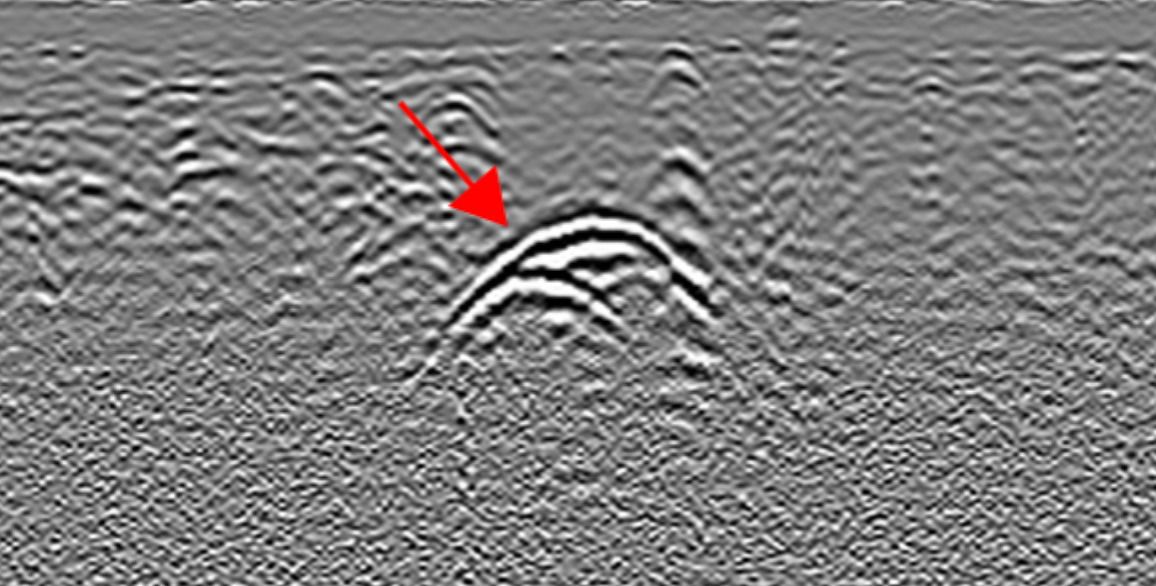
We’ve explained why it’s important to locate underground storage tanks, but how can you locate these buried systems? There are a few tools and methods you can use. First there’s electromagnetic (EM) locating technologies that use a specific radio frequency that can help detect pipe systems leading into the UST. EM locators are often used to detect a variety of utilities and pipes, and can be useful in this case. Second, there’s ground penetrating radar. Ground penetrating radar, or GPR for short, transmits electromagnetic waves from the device that penetrate the ground and reflect off of material changes underneath the surface into a receiver for a visual indication of buried utilities and structures.
Many USTs are made of materials that can easily be detected using GPR such as fiberglass, steel, or aluminum. They also produce a unique visual wavelength that can help distinguish an underground storage tank from other underground objects. If additional clarification is needed, a split box can be used to help determine if an underground storage tank is metallic or not. These investigative techniques add up to location information that can help you mitigate risks by protecting USTs for construction, replacement and remediation.
Our team at Trinity Subsurface can provide you with full service utility locating, including locating underground storage tanks. Visit our website for further information on how you can protect your underground infrastructure.


