

Public Versus Private Utility Locating: The Benefits of Both
If you’re deciding whether or not you need a private utility locator, understanding the differences between public and private utility locating services is beneficial. Both public and private locators can be helpful on various project sites, both large and small.
The Cost of Utility Locating
Calling a public utility locator is completely free. Public locating services are set up and paid for by utility companies to help avoid excessive damages to their existing underground lines. These lines usually fall within the public right-of-way.
Getting public utilities marked out requires notification to an 811 service, which can go by many different names depending on your state. This includes One Call, Miss Utility, Call Before You Dig, DigSafe, and more. In some areas, it’s the law to call a public utility locator before you dig. Unlike public locating services, private utility locators are paid by contractors, engineers, homeowners and more to perform the work. Private locating services are a beneficial resource for understanding what’s underneath your site for a number of reasons.
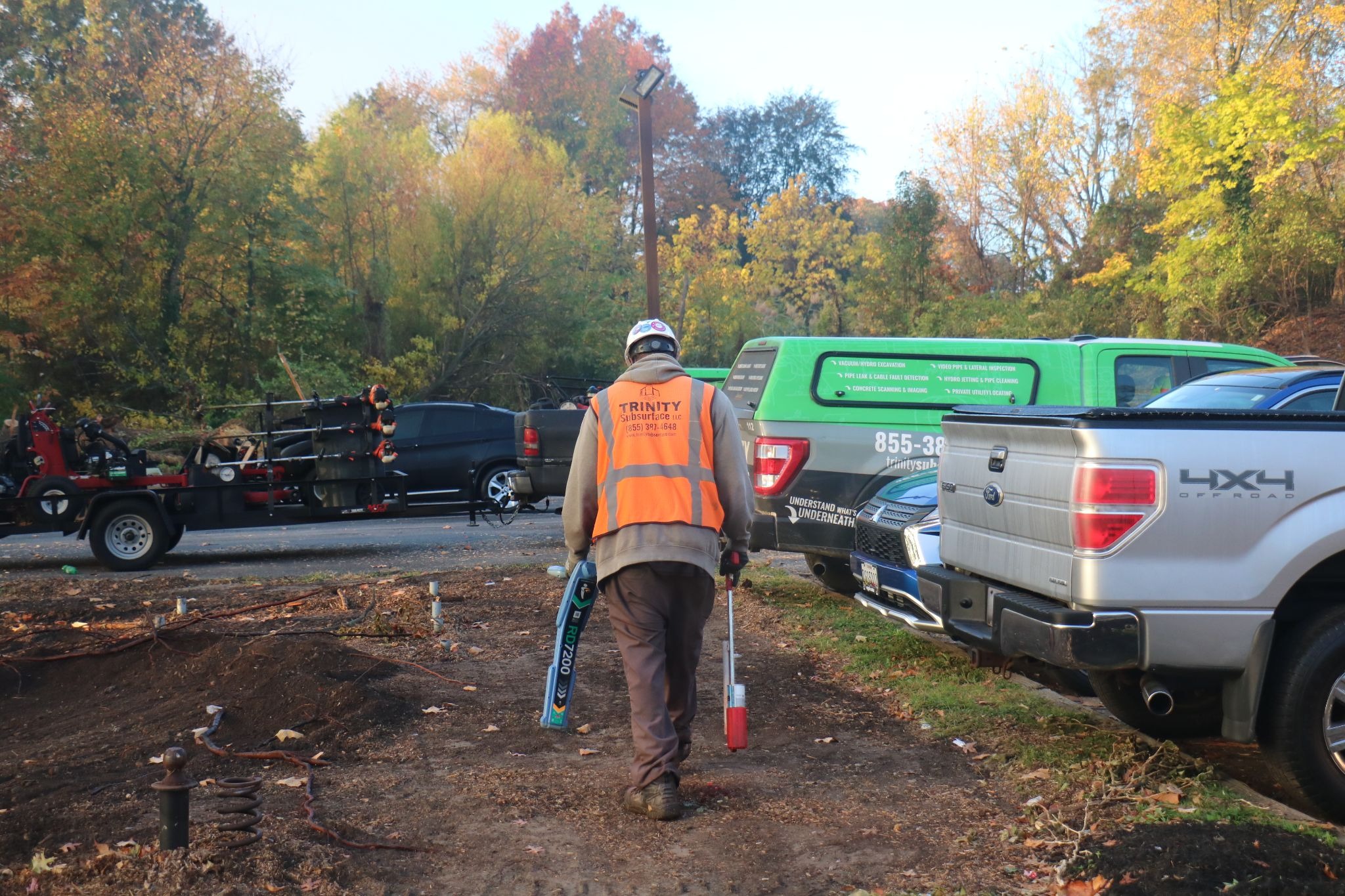
Public VS Private Utility Markings
Public utility locators will typically only mark out publicly owned lines, where private locators will mark out private lines as well. Public locators usually have as-builts of their utilities to assist with markouts, which are useful for basic investigations. If a public utility locator can’t mark all of the lines on a site, they may recommend calling a third-party locating company to mark out the rest.
Private utility locators aim to locate the entirety of a site’s utilities, including lines not marked by the free public services. Private utilities are utilities that are installed and operated outside the jurisdiction of public services. An electric line that runs from a building to a shed, for example, would be considered a private utility, and wouldn’t be marked by calling 811.
A few other examples of private utilities include boiler room lines, irrigation lines, and communications lines on large campuses. Some private utilities, such as lateral sewer connections, can be connected to public sewer services while still being considered private.
Locating Response for Markouts
Public utility locators are called out on a ticketed, short response basis. It’s standard for public locators to mark their required lines at a single property and move onto the next site. A public utility locator may cover multiple sites within an area over the course of a single day. These markings usually rely on existing records managed by the utility companies.
Public utility locators also don’t need homeowner approval to perform markings in most cases.
Since the utility is owned by someone else, performing work on the utility is typically the responsibility of the utility company.
Public locators may try to avoid encroaching on private property, but you may find spray paint in your yard or your driveway from the public locator services, even if you didn’t call. This paint can last a while depending on the type of paint used. These utility markouts help provide public improvements without endangering people and local communities. Homes have exploded as a result of utilities not being marked properly, if at all.
The Benefits of Locating Private Utilities
Hiring a private utility locator can be beneficial for the extra level of investigation. A private utility markout requires looking into all of the possible underground features on a site. This involves researching existing as-built records, looking for surface features, and using multiple tools to confirm the existence of utilities and structures.
Compared to public services, private utility locators typically have more time allocated on site, which allows for a more in-depth locate if unexpected utilities or problems are encountered.
Public utility locators often rely on electromagnetic scans alone to perform markouts. Private utility locators may use additional tools, such as ground penetrating radar and split boxes, to get a more accurate reading of what’s underground. Private locators can reconfirm and verify marks made by public locating services. In addition to standard markings, private locators can also provide maps and notes about findings on a site, including any potential investigation limitations or unknowns.
If you need private utility locating services, our team at Trinity Subsurface can provide full markouts and maps of what’s underneath your site. For more information, check out the rest of our website to find out how we provide full subsurface utility engineering to protect you and your projects.
Need it on your site? Request a proposal or call (855) 387-4648.


